Risk Workshops
Your risk register is a network.
A working session for risk professionals on how the risks you already manage connect, and what becomes visible when they do.
The idea
A register is a list. A risk is rarely alone.
Most risk professionals keep a register: the exposures it holds, each one assessed on its own. This session starts from that list and works only from what you already track. It takes what every risk professional already recognises — that those risks are connected — and turns it into an explicit structure you can put to work straight away.
No modelling background is needed, and nothing unfamiliar is introduced. The whole session rests on one shift in how a register is read.
Why it matters
What the network view gives a risk manager.
Risk managers have always known their risks connect — it is why we talk about second-order effects, cascades and systemic risk. Network analysis is simply the method that lets you work with those connections directly: the same family of techniques used in epidemiology, infrastructure and supply-chain analysis, pointed at the questions risk management has always asked but never been able to answer from a list.
See the connections, not just the entries
A register holds risks in isolation; the network shows the direction of effect — so you reason about the system, not only its parts.
Find what matters for where it sits
Centrality and path analysis surface the single points of failure and choke points a severity score would never flag — the load-bearing risk.
Follow the cascades
Trace how a disruption propagates — what it reaches, through which dependencies, and where it compounds — instead of estimating second- and third-order impact by hand.
Target scenarios and spend
Design the few scenarios that matter because the structure says so, and direct resilience investment where there is genuinely no alternative path — defensible to the board and the regulator.
What you'll do
Practice-based workshop.
Part 1
From a list to a network
Working from a typical register, you join the risks up, asking what affects what and in which direction. A list you have always read top to bottom becomes a network you can read across. The point lands quickly: the register already describes a system.
Part 2
What the network reveals
With the connections on the page, the session turns to what a network makes visible that a list cannot. When one risk fails, you can follow where the stress travels, and watch it reach risks the register had kept on separate lines. It is also where the feedback loops show themselves — the places where risk returns to its source.
Who it's for
For anyone who wants more than a risk register.
The session is for risk professionals in any sector who are comfortable with risk management. It assumes no prior knowledge of networks, and no technical skills.
- Format
- Online, around three hours, in two parts.
- Bring
- A slice of your own register if you can, or work from the shared example provided on the day.
- Leave with
- A repeatable way to map how your risks connect, and a tool to do it again on your own.
Built by the room
The map belongs to the group.
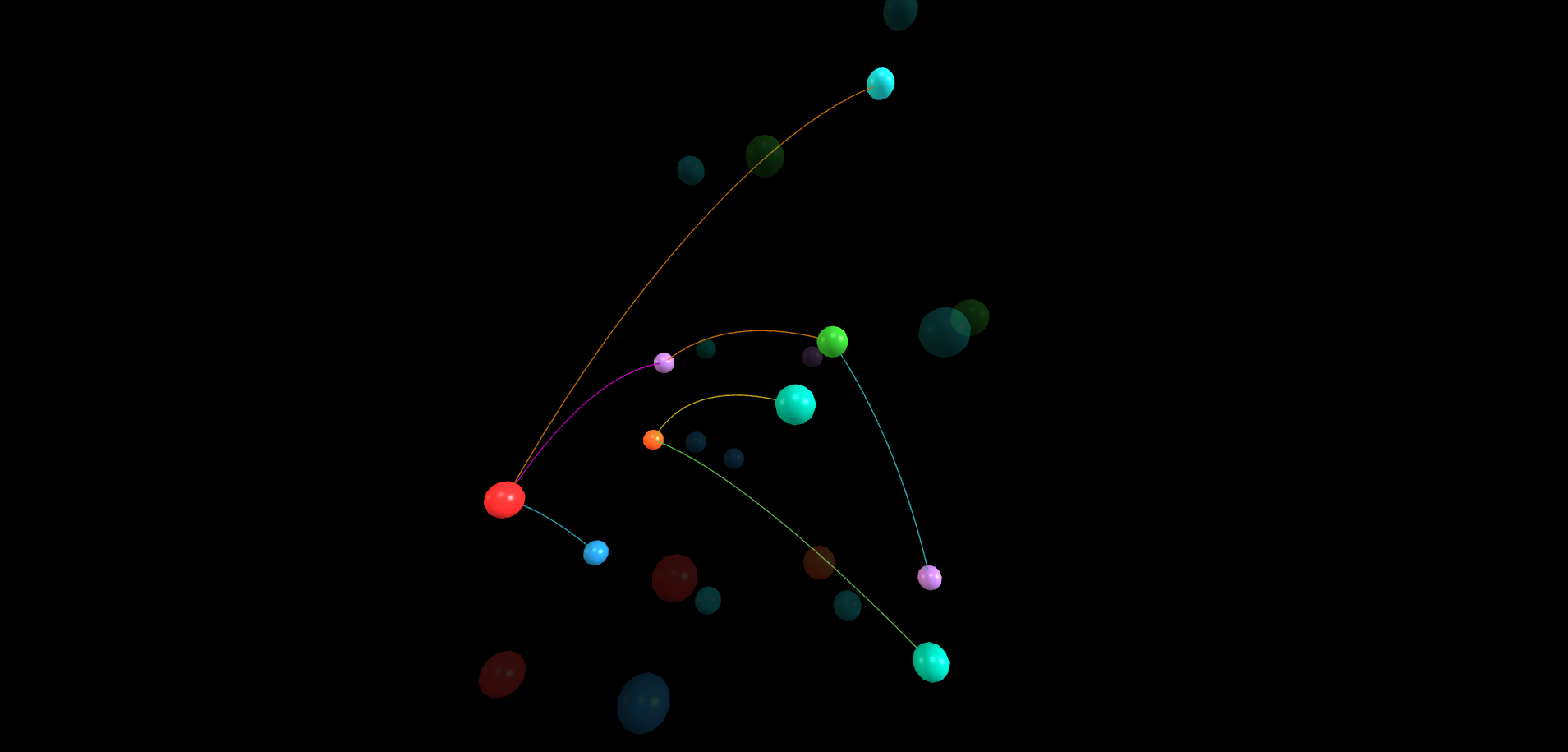
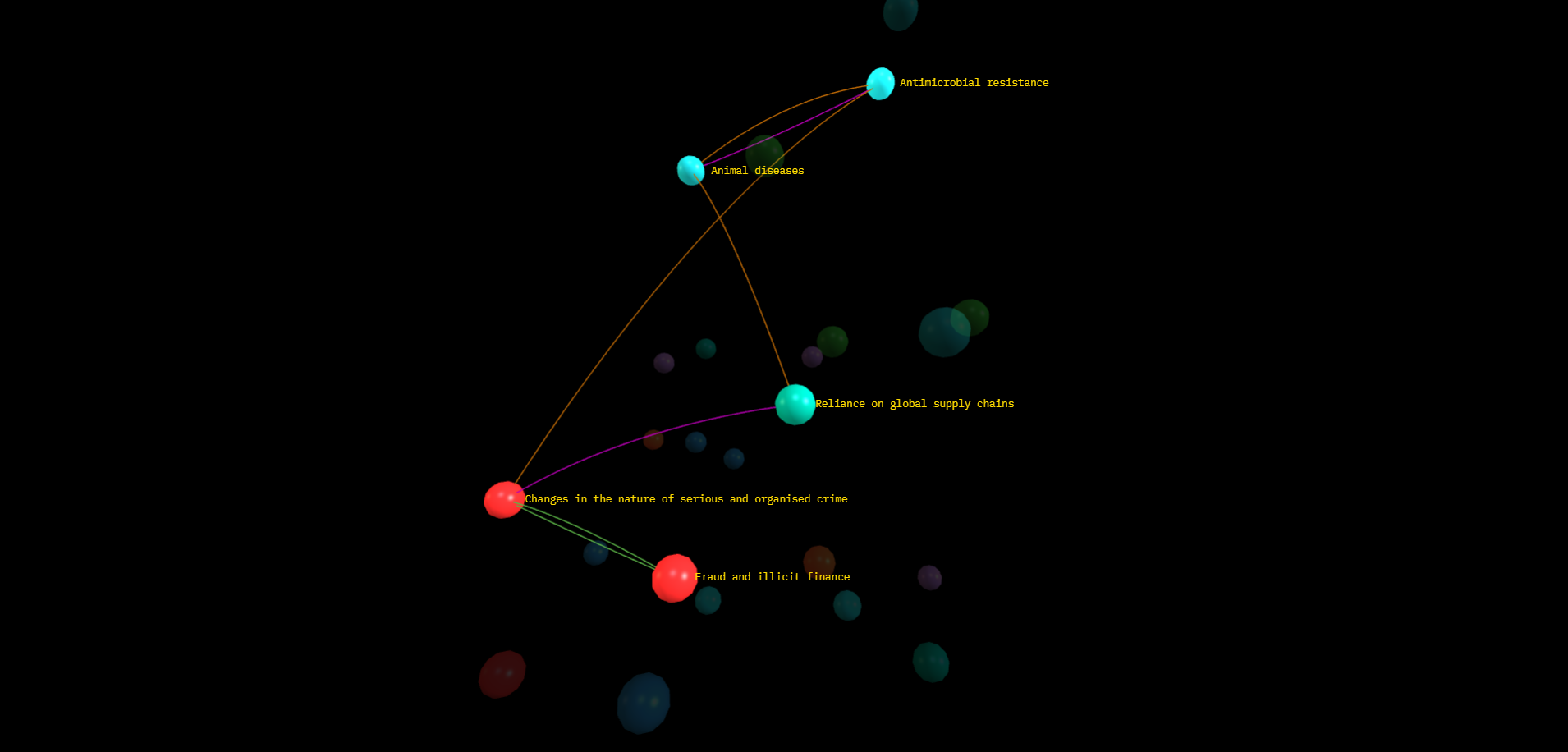
Part of the session is built live. Everyone takes a few minutes to note which risks they think drive which. The responses are pooled, and the connections that most people recognise are drawn into the network. What appears on the screen is the room's own picture of its risks.
Where it leads
From the room's map to the working platform.
The session ends with a live look at Risk Portal — the platform that does this at scale, turning a network of risks into something you can interrogate: where stress travels, which connections carry it, and which points the system depends on.
Take the method with you
The prompt that turns a list into a network.
The same step can be done with any AI assistant, with no specialist tools. Leave your email and we'll send you the prompt to reuse on any register you like.